
Indonesian Coffee
Sumatra's wet-hulled Mandheling lots, grown 900–1,500m for a heavy, syrupy body with earthy, herbal depth and low acidity. Roasted to order and shipped free across Canada over $50.
Products in this collection
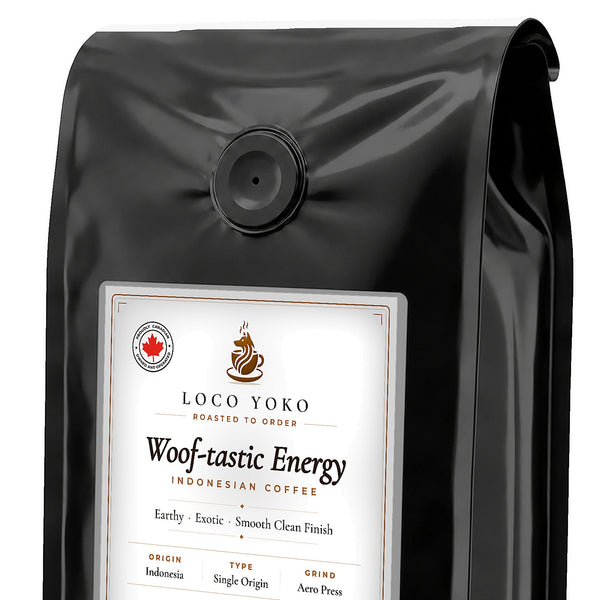
Woof-tastic Energy
Earthy · Exotic · Smooth with a clean finish
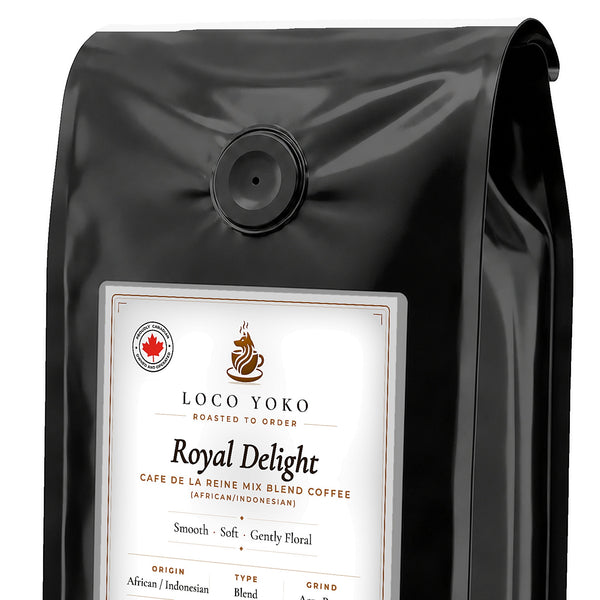
Royal Delight
Smooth · Soft · Gently floral
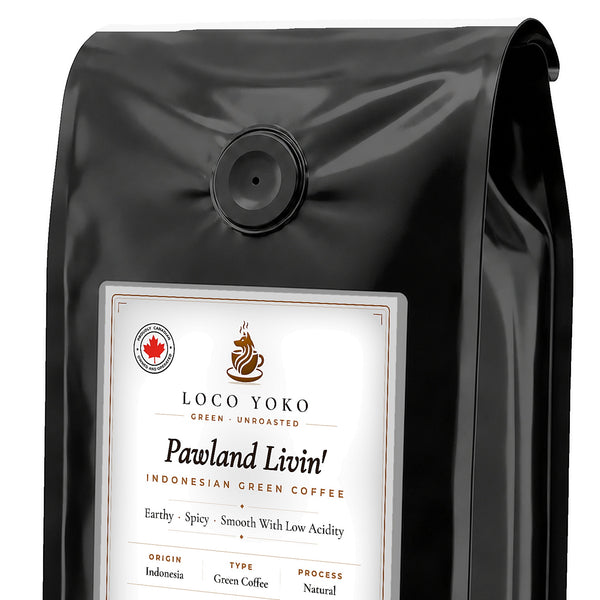
Pawland Livin'
Earthy · Spicy · Smooth with low
Try removing a filter or two.
Tap a choice and we'll take you to the next step.
Indonesian Coffee: A Guide to Sumatra, Sulawesi, and the Archipelago's Wet-Hulled Tradition
Indonesian coffee occupies its own corner of the flavor map, and once you've tasted a proper cup you understand why roasters and drinkers alike talk about it separately from the rest of the world's coffee-growing regions. The archipelago stretches across the equator with volcanic soil, high-altitude terrain, and a humid, wet climate that together produce some of the most distinctive indonesian coffee beans anywhere — heavy in body, low in perceived acidity, and carrying a signature earthy, herbal, sometimes woody character that you won't find coming out of Africa or Central America. If you've spent time with our bright, berry-forward Kenyan lots or the citrus-and-caramel clarity of our Antigua-grown Guatemalan coffee, Indonesian coffee will feel like stepping into a different flavor family entirely. It's not better or worse — it's a genuinely different tool for a different cup.
Where This Coffee Grows
The two islands that matter most for specialty coffee are Sumatra and Sulawesi, though smaller volumes come out of Java, Flores, and Bali as well. On Sumatra, the bulk of the crop comes from the highlands around Lake Toba in North Sumatra — districts like Lintong, Mandheling (technically a Batak sub-region historically associated with the Mandailing people, not a place name in the strict sense, though the trade has long used it that way), and the Gayo highlands in Aceh province further north. Elevations here typically run from 900 to 1,500 meters, with the best lots coming from smallholder farms scattered across steep, forested terrain rather than large consolidated estates. Farmers here tend small plots — often one or two hectares — intercropped with other food and cash crops, and coffee cherries are collected and processed through a dense web of local collectors before reaching a mill.
Sulawesi's coffee-growing area centers on the Toraja highlands in the island's south-central mountains, where sulawesi toraja coffee is grown at elevations comparable to or higher than Sumatra's best sites, often 1,200 to 1,800 meters. Toraja coffee tends to share the low-acid, full-bodied profile of Sumatran coffee but with a bit more clarity and a cleaner, sometimes fruitier top note, which is part of why it's prized as a slightly more refined sibling to classic Sumatra lots.
The Processing Method That Defines the Region
What actually sets Indonesian coffee apart from almost everywhere else in the world isn't the soil or the altitude — it's the processing method. Most of the region uses a technique called Giling Basah, or wet hulled coffee sumatra production, and it's unlike anything practiced at scale elsewhere. In washed processing, the parchment layer stays on the bean until it's fully dried to around 11-12% moisture before hulling. In Indonesian wet-hulling, farmers pulp the cherry, ferment and partially wash it, then dry the beans only briefly — often overnight, sometimes with a moisture content still as high as 30-35% — before hulling off the parchment while the bean is still damp. The naked green bean is then dried the rest of the way in the open air, exposed and vulnerable, which causes it to take on a bluish-green tint and swell slightly.
This unusual sequence is largely a practical response to the region's climate. Sumatra and Sulawesi both sit in areas with high year-round humidity and unpredictable rain, which makes it difficult for smallholder farmers to sun-dry parchment coffee slowly and evenly the way growers in drier climates can. Wet-hulling shortens the vulnerable drying window and lets farmers sell wet parchment quickly to collectors, who then finish the drying at a central point. The tradeoff is a bean that's more exposed to oxidation and handling during that early hulling stage, and that exposure is exactly what produces the heavier body, lower acidity, and earthy, sometimes mushroomy or cedar-like notes that define the cup. It also makes the coffee noticeably less consistent lot to lot than a fully washed process would, which is part of why sourcing well here — working with mills and importers who manage quality control tightly — matters more than it does in some other origins.
What This Coffee Actually Tastes Like
If you're trying to get a handle on indonesian coffee taste notes before you buy, think heavy, round, and savory rather than bright or fruity. Classic Sumatra Mandheling delivers deep earthy tones, dark chocolate, cedar and tobacco-leaf undertones, a syrupy mouthfeel, and a long, low-acid finish that sometimes reads almost herbal or spiced — cardamom and black pepper show up in some lots. It is, straightforwardly, one of the best examples in the world of what people mean when they ask for earthy chocolate coffee beans. There's little of the citrus or berry brightness you'd get from an East African coffee, and that's the point — this is a coffee built for depth and weight, not acidity and lift.
Sumatra mandheling coffee in particular is prized for its low acidity and heavy body, which makes it a favorite for people who find brighter coffees too sharp or sour first thing in the morning. Sulawesi Toraja follows a similar template but often shows a touch more sweetness and a cleaner cup, sometimes with hints of dried fruit or brown sugar layered over the same earthy, full-bodied base. If you want a useful mental comparison, think of the difference between Sumatra and our nutty, low-acid Brazilian coffee: both are heavy-bodied and gentle on the stomach, but Brazil leans nutty and chocolatey with a smoother, rounder profile from natural or pulped-natural processing, while Sumatra pushes further into savory, herbal, and earthy territory as a direct result of that wet-hulled method. Neither is trying to be bright — they're both comfort-cup coffees — but Sumatra has more edge and complexity to it.
Low Acid and Full Body: Why That Combination Matters
A huge share of the people who specifically search out low acid coffee beans end up in Indonesian coffee, and for good reason. The wet-hulling process, combined with the naturally lower-acid character of these varietals and growing conditions, produces some of the gentlest coffee on the stomach that you'll find in the specialty world without sacrificing flavor complexity or body. If bright, acidic coffee gives you heartburn or just doesn't appeal to your palate, a well-sourced Sumatra or Toraja is worth trying before you write off dark, heavy coffee as "harsh" — done well, it's smooth, not bitter.
That low acidity pairs with serious weight on the palate. These are unambiguously full bodied coffee beans, with a syrupy, almost viscous mouthfeel that coats the tongue in a way lighter-bodied origins simply don't. That body holds up remarkably well through milk, through cold brew, and through the kind of long steep times that would turn a delicate Ethiopian natural muddy and flat. It's a big reason this origin shows up so often in blends built for milk drinks — the body cuts through steamed milk instead of getting lost in it.
Roast Level Guidance
Indonesian coffee is famously roast-flexible, but it rewards a heavier hand more than most origins. Sumatra coffee dark roast profiles are the classic expression — pushed into second crack, the sugars caramelize hard against that already-heavy body and earthy base, producing a cup that's bittersweet, smoky, and thick, closer to what a lot of people picture when they think "dark roast coffee" in the first place. This is where Sumatra shines in drip brewers, French press, and moka pot, and it's the traditional roast level for the origin because it was, for decades, essentially the archetype of specialty dark roast in North America.
That said, a lighter or medium roast on a well-processed lot can reveal more of the specific herbal, cedar, and dried-fruit notes that get roasted over into simple smokiness at full dark. If you're curious about the more nuanced side of the origin, ask for or look out for a medium-roast Sulawesi Toraja rather than defaulting straight to dark Sumatra — you'll taste more of what the terroir is actually doing. Either way, because Indonesian beans wet-hull green and dry unevenly compared to washed coffee, they roast a little differently than beans you might be used to — expect a slightly longer development time and keep an eye on evenness, since wet-hulled beans can be more heterogeneous going into the roaster than a uniformly washed lot from, say, Kenya or Guatemala.
Brewing Recommendations
Given the body and low acidity, Indonesian coffee performs best in brew methods that let that weight come through rather than methods built to highlight delicacy. French press is the classic pairing — the metal filter lets oils through and preserves the syrupy mouthfeel instead of stripping it out the way paper filters do. Moka pot and full-immersion methods generally suit it as well. Drip and pour-over both work fine, but if you're using a paper filter, expect a slightly cleaner, lighter-bodied result than the immersion methods will give you, since paper catches more of the oils that carry that heavy Sumatra character.
Cold brew is another strong match. The long steep time and cold extraction naturally suppress acidity even further while still pulling out plenty of body and sweetness, which makes a dark-roast Sumatra one of the more forgiving, mistake-tolerant beans for home cold brewing — it's hard to over-extract into bitterness the way you can with a more delicate washed coffee. On the espresso side, this is also a genuinely strong pick: if you're wondering about the best indonesian coffee for espresso, a medium-dark Sumatra or Toraja pulls a shot with heavy crema, low acidity, and a thick, chocolatey body that holds its own in milk drinks — lattes and cappuccinos in particular. It won't give you the fruit-forward, complex espresso shot you'd chase with a washed Kenyan or a fancier Central American lot, but for straightforward, punchy, milk-friendly espresso, it's hard to beat.
Buying and Sourcing Considerations
Sourcing well matters more with Indonesian coffee than with a lot of other origins, largely because of how fragmented the supply chain is. Cherries typically pass through several hands — farmer, local collector, sub-collector, mill — before reaching an exporter, and that chain creates more opportunity for inconsistency than the more vertically integrated systems common in places like Brazil or on large single estates elsewhere. When you're looking to buy sumatra coffee beans online canada — often searched as indonesia sumatra coffee beans — it's worth paying attention to whether a roaster can tell you anything specific about the lot: region, elevation, processing detail, harvest window. A roaster who can only tell you "Sumatra" and nothing else is probably buying a generic commercial-grade blend rather than a lot that was selected and cupped for quality.
Certifications matter here too, more than in some origins, because of the smallholder-heavy structure of production. Organic fair trade sumatra coffee is widely available and worth seeking out specifically because so much of the crop comes from small family farms where fair pricing has a direct and immediate impact on the grower, rather than passing through a large estate's margins first. Fair Trade and organic certification in this origin tends to correlate with cooperatives that have invested in better post-harvest infrastructure — drying patios, quality sorting, moisture meters — which in turn tends to mean a cleaner, more consistent cup in your bag.
All of our beans are roasted to order here in Toronto, and we recommend giving any fresh-roasted coffee — Indonesian lots included — a 24 to 72 hour rest after roasting before you brew. That rest period lets residual CO2 escape the bean, which matters even more for wet-hulled coffee since the denser, heavier structure can hold onto gas a little longer than a fast-dried washed bean. Skip the rest and you'll often get uneven extraction and a bloom that looks more dramatic than it should; give it those couple of days and the cup settles into the round, syrupy profile this origin is known for. If you want to browse the wider lineup before deciding, our full coffee collection spans everything from bright washed lots to heavy dark roasts like these, and if you're set up to roast at home yourself, we also carry unroasted green coffee for exactly that kind of experimentation — Indonesian green in particular is a fun, if slightly unpredictable, one to practice on given how much the wet-hulled moisture content varies lot to lot.
Whole Bean vs. Ground, and Storage Notes
Because of that heavier body and oil content, we'd always recommend buying sumatra whole bean coffee canada shoppers can grind fresh at home rather than pre-ground, even more so than with lighter origins. The oils that carry so much of Sumatra's character oxidize faster once the bean's surface area is exposed by grinding, and a coffee whose whole appeal is body and richness loses that appeal fastest of any style when it goes stale. Grind just before brewing if you can, store the bag sealed and away from light and heat, and you'll get several weeks of good drinking out of a fresh-roasted bag rather than a few days.
Single-origin Indonesian coffee has carved out a loyal following across Canada precisely because it does something none of the more common origins do — Brazil is nutty and smooth, Colombia is balanced and approachable, Ethiopia and Kenya go bright and fruity, and then Sumatra and Sulawesi go the other direction entirely into heavy, earthy, low-acid territory. If you're building out a home coffee rotation and want real range in the cup rather than five bags that all taste like variations on the same theme, single origin indonesian coffee canada drinkers rely on is the origin that rounds things out. It's the bag you reach for on a slow Sunday morning with French press and full-fat milk, not the one you reach for when you want a light, snappy pour-over to start the day.
FAQ
What makes Sumatra coffee taste different from other origins?
The biggest factor is the wet-hulled processing method used almost exclusively in Indonesia, where the parchment is removed from the bean while it's still damp rather than fully dried. That produces a heavier body, much lower acidity, and earthy, herbal, sometimes cedar-like or spiced flavor notes that you don't get from washed or natural processing used in most other coffee-growing countries.
Is Indonesian coffee always dark roast?
No, though dark roast is the traditional and most common expression, especially for Sumatra. A medium roast can highlight more of the specific terroir notes — dried fruit, cedar, light spice — that get roasted over into general smokiness at full dark. Sulawesi Toraja in particular is worth trying at a medium roast if you want to taste more nuance.
Is Sumatra coffee good for espresso?
Yes. A medium-dark Sumatra or Toraja pulls a heavy-bodied, low-acid shot with thick crema that holds up especially well in milk drinks like lattes and cappuccinos. It won't have the bright, fruit-forward complexity of a washed African espresso, but for a rich, chocolatey, milk-friendly shot it's a strong and reliable choice.
Why is Indonesian coffee lower in acidity than other origins?
It comes down to both the wet-hulled processing method and the growing conditions themselves. The abbreviated drying and early hulling change the bean's chemistry in ways that suppress the bright acids you'd get from a fully washed process, while the humid, high-altitude volcanic terrain across Sumatra and Sulawesi favors heavier, rounder flavor development over sharp acidity in the first place.
What's the difference between Sumatra Mandheling and Sulawesi Toraja?
Both are wet-hulled, low-acid, full-bodied coffees, but Sumatra Mandheling tends to be earthier and more savory, with tobacco, cedar, and dark chocolate notes and a heavier, syrupy mouthfeel. Sulawesi Toraja shares that same low-acid, full-bodied base but usually shows a touch more sweetness and cup clarity, sometimes with dried fruit or brown sugar notes layered over the earthy foundation.
How should I store and brew Indonesian coffee at home?
Buy whole bean rather than pre-ground, since the oils that carry Sumatra and Toraja's signature body oxidize quickly once the bean surface is exposed by grinding. Store the bag sealed away from heat and light, grind just before brewing, and let freshly roasted coffee rest 24 to 72 hours before your first brew. French press, moka pot, and cold brew all suit the style particularly well because they preserve or emphasize the body rather than stripping it out.
Frequently asked questions
The essentials about this collection. Still curious about something?
Ask us anything